
The Crash
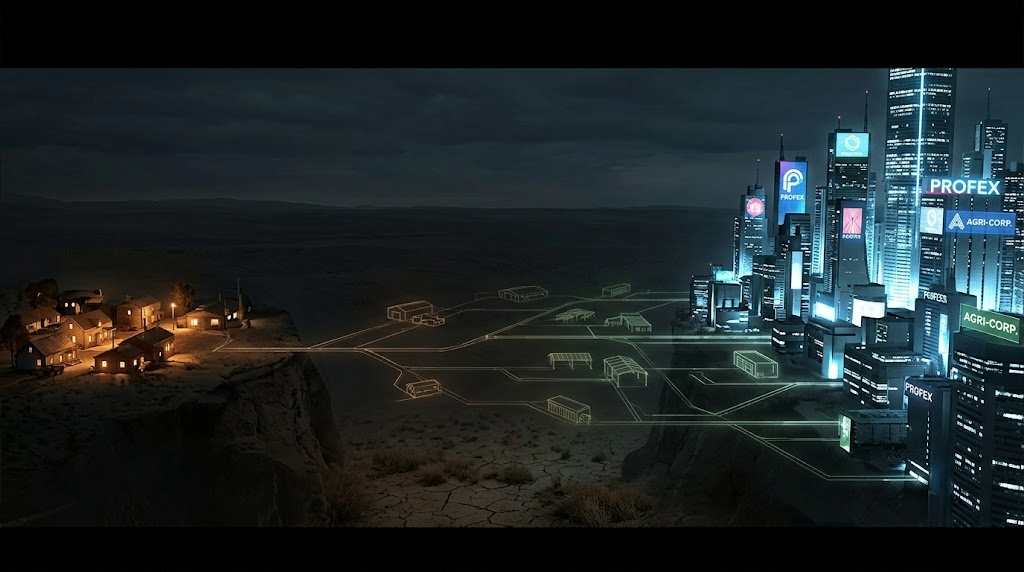
We built a world of straight lines. For a century, we believed that the strongest path was a straight line. Farm to Warehouse. Warehouse to Plate. Efficient. Predictable. Rigid.
But the world isn't straight anymore. It is volatile. Chaotic. Unpredictable. And when a rigid column meets a shaking world, it doesn't flex. It doesn't adapt. It snaps.
Welcome to the failure of the Linear Age. The age where we optimized for efficiency and forgot about resilience. Where we built systems so lean they had no room to breathe. Where a single disruption cascades into collapse.
The pillars are falling. And in their place, we must weave something stronger.
The Smell of Failure
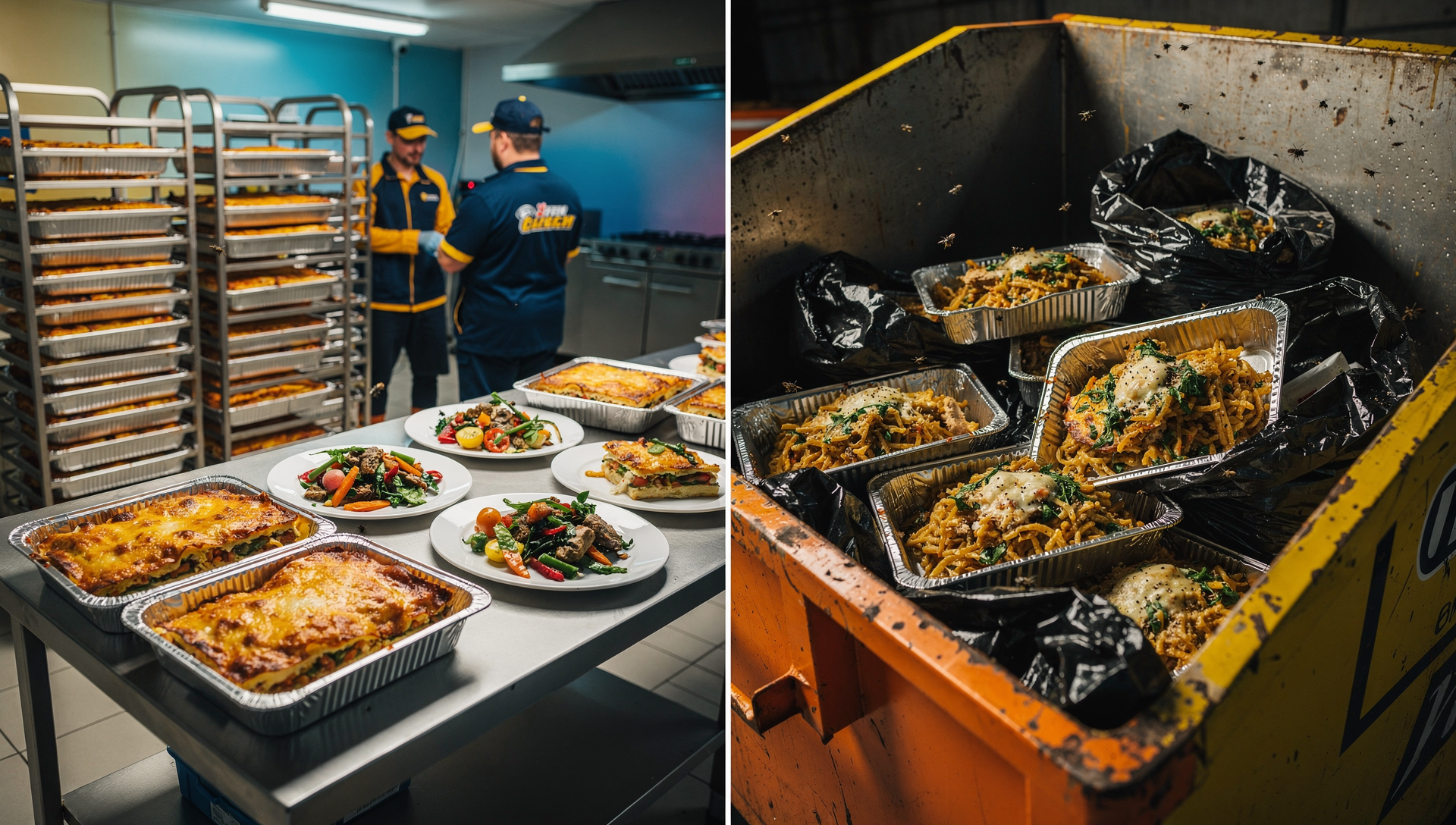
You know this smell. It's the smell of a loading dock at midnight. It's the scent of fifty trays of pristine lasagna rotting in a dumpster because a truck didn't show up. Because a driver called in sick. Because fuel prices spiked. Because the weather turned.
This isn't a "policy error." This isn't an operational hiccup. It's a structural crime against both ecology and economy.
We are trying to support the weight of a chaotic world on a supply chain that has zero slack. Zero redundancy. Zero flexibility. The system is breaking at the seams, and it's taking our food, our soil, and our future with it.
Every night, across every city, the same story plays out. Perfectly good food becomes toxic waste because the linear system cannot tolerate even the smallest deviation from plan.
The Engineering Fix
Buckminster Fuller tried to warn us. He taught us that the strongest structures in the universe aren't heavy towers or rigid columns. They are webs. They are networks. They are geodesic spheres held together by distributed tension.
In a tensegrity structure, the solid parts never touch. They float in a sea of tension, connected by filaments that distribute stress across the entire system.
If you punch a stone wall, it cracks. The force concentrates at the point of impact. But if you punch a spiderweb, it dances. It absorbs. It redistributes the shock instantly across the entire network, then returns to equilibrium.
We don't need to fix the pillar. We need to weave the web. We need to build systems that flex instead of break. That distribute instead of concentrate. That thrive on volatility instead of collapsing under it.

The Coordination Failure
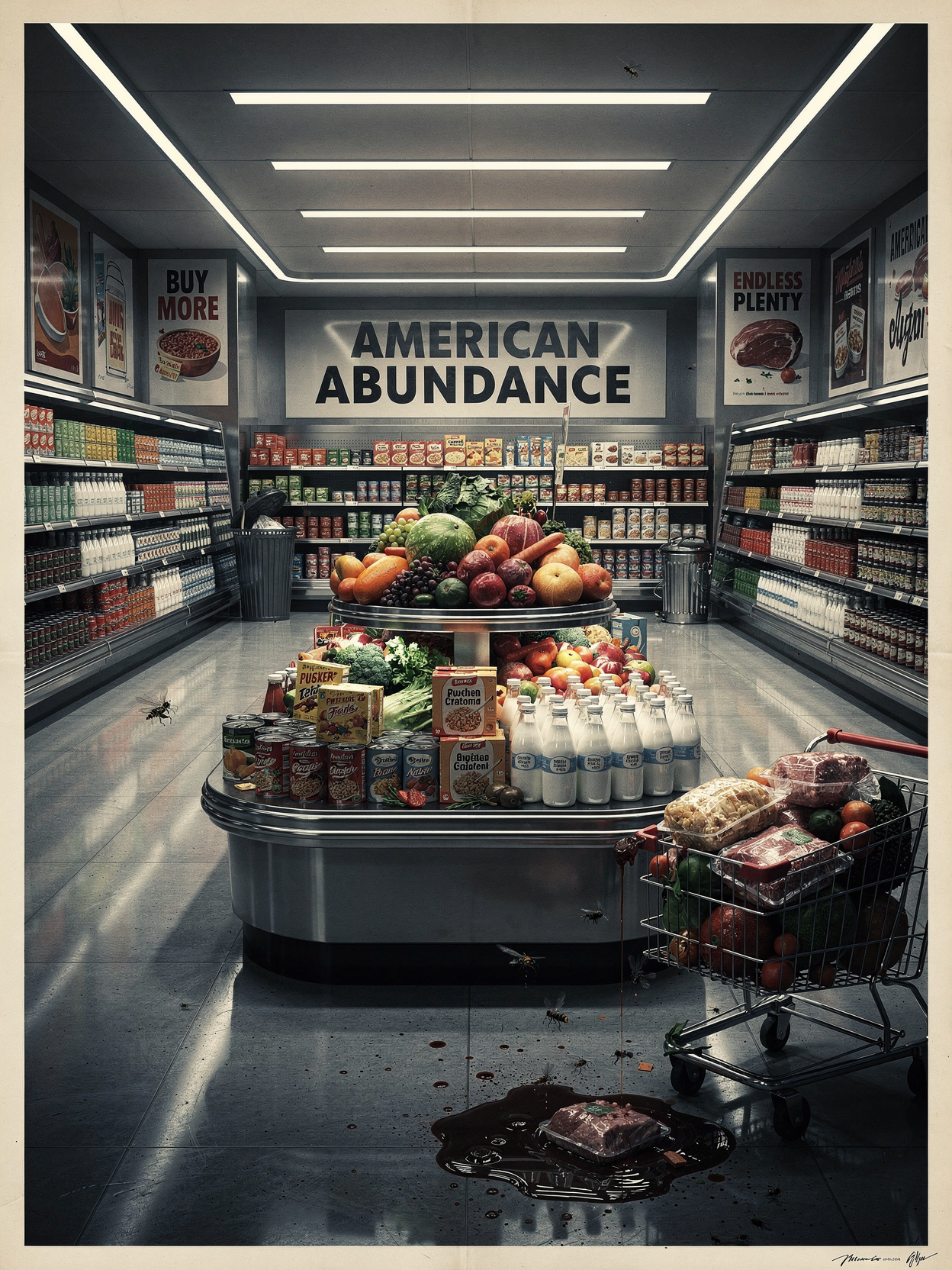
The United States loses $970 billion annually to coordination failures in food, waste, and resource systems, while our communities struggle with scarcity those same resources can solve — if they were in the right place, safe to eat or in a usable format, and accessible on a budget.
This situation isn't just inefficiency — it's the predictable outcome of infrastructure designed for a Cold War that ended 35 years ago.
In the 1930s, the USDA didn't create supermarkets to feed people efficiently. They created them as marketing weapons — literal propaganda displays to show the Soviets and the world how much America could produce. Nonrecourse loans guaranteed farmers would overproduce regardless of market demand, creating mountains of surplus that became the backbone of our food system.
The story we've been telling ourselves for ninety years is that abundance means waste. Now that story costs us $970 billion annually, and our communities are literally starving in the middle of surplus.
Meanwhile, cities pump millions of dollars annually into fighting landfill fires caused by decomposing organic waste. The very material that would solve drought crises across agricultural communities is instead generating methane, catching fire underground, and poisoning groundwater.
That's not ideology. That's just expensive resource theater.
The Pivot
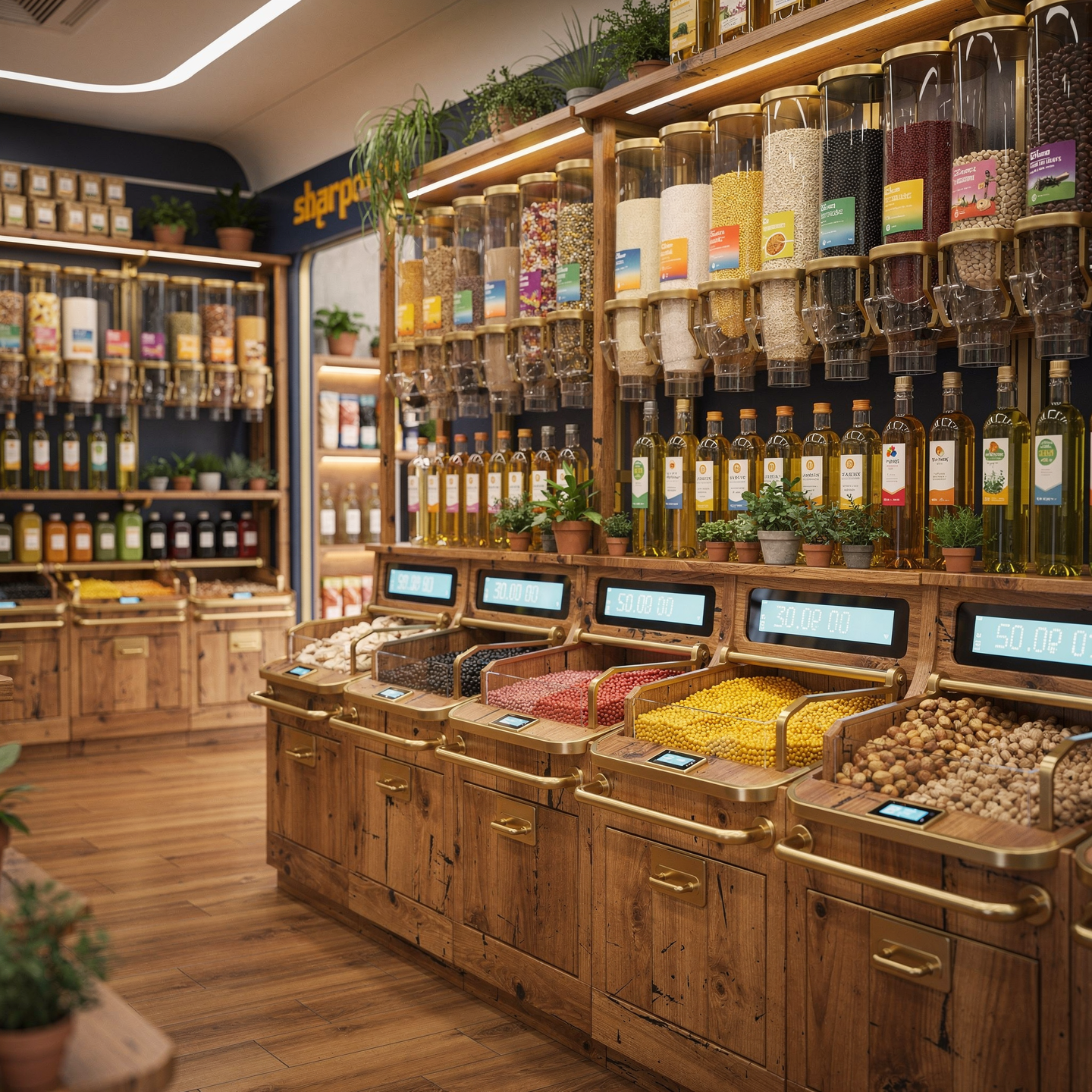
We are done begging for permission. Done writing letters to committees that meet quarterly and decide nothing. Done waiting for policy changes that take decades while the planet burns.
A Community Sustainability Hub isn't a place to talk about sustainability. It isn't a conference room or a steering committee. It's a logistics engine, a value-creation machine, and a preferred vendor that solves real problems for real businesses right now.
We don't ask businesses to "go green" out of the goodness of their hearts. We offer a trade. A transaction. A deal they can't refuse:
Liability
- Waste
- Excess Inventory
- Regulatory Risk
- Disposal Costs
Value
- Revenue
- Competitive Advantage
- Tax Benefits
- Brand Equity
We aren't activists waving signs. We are the logistics partner that makes your business better. More resilient. More profitable. More future-proof.
The Time Machine
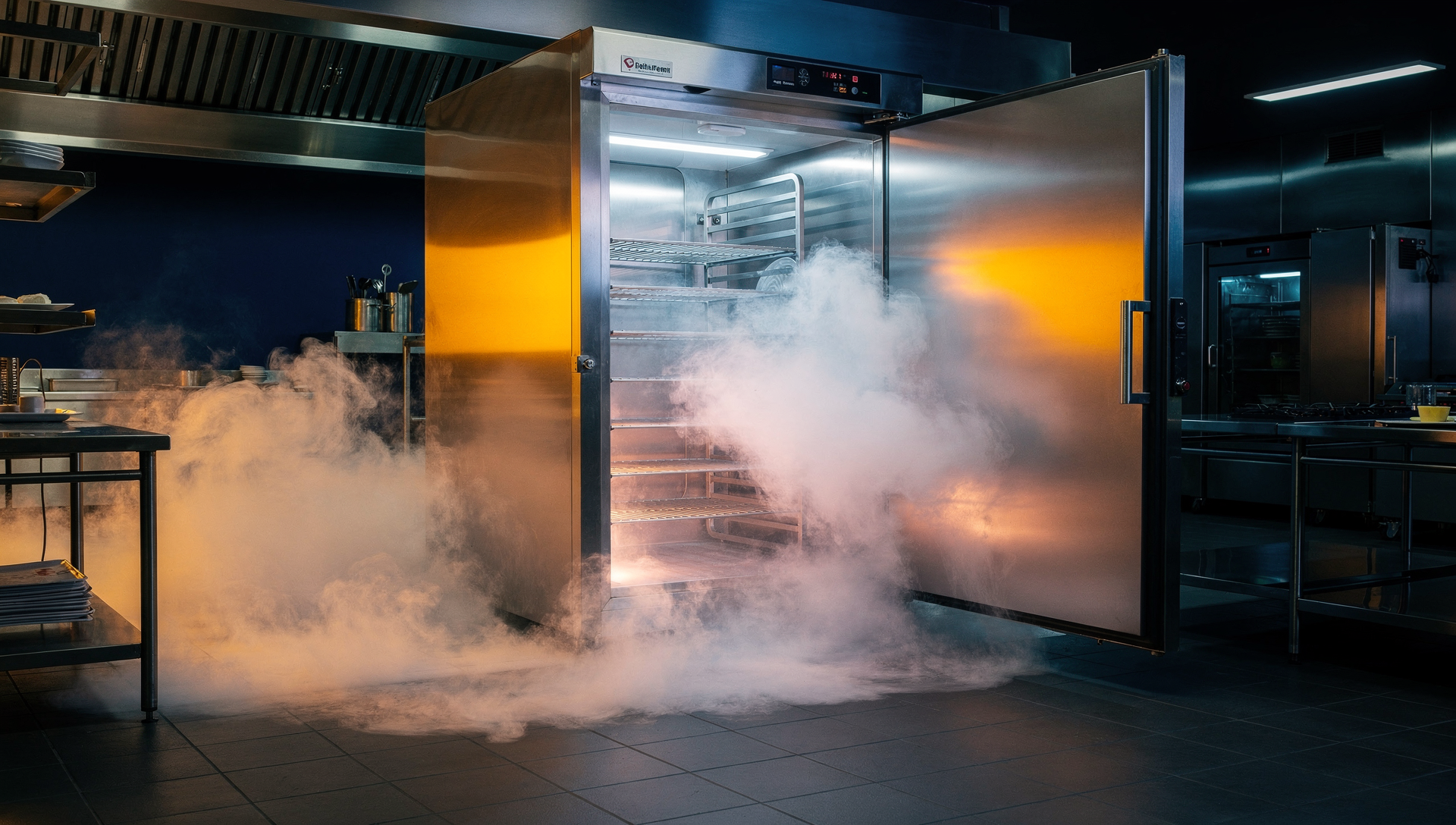
We found a way to stop time. Hot food is a ticking time bomb. You have four hours before chemistry turns nutrition into poison. Four hours before perfectly good meals become hazardous waste.
But what if you could pause the clock? What if you could decouple the rescue operation from the emergency?
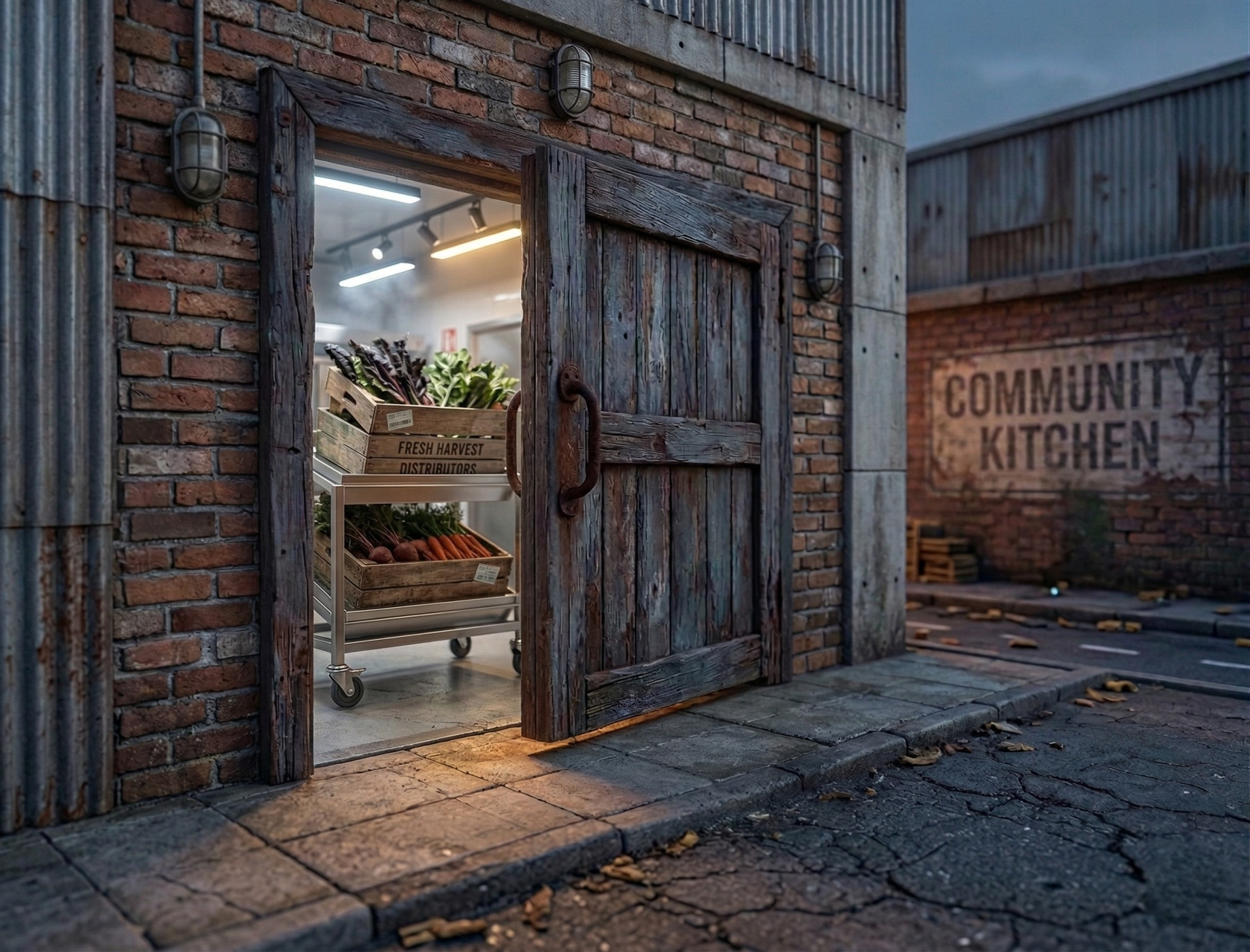
By deploying industrial blast chillers directly inside commercial kitchens, we turn "perishable waste" into "frozen inventory" in ninety minutes. We drop the core temperature from danger zone to deep freeze before bacteria can multiply.
The food doesn't rot. It waits. Patient. Stable. Ready to be redistributed when the logistics align. We don't race against decomposition anymore. We've removed time as a constraint.
This isn't science fiction. It's industrial refrigeration deployed strategically. And it changes everything.
The Alchemy
The City's Problem
Organic waste fills landfills, generates methane, costs millions in disposal fees, and represents a massive regulatory liability.
The Farm's Problem
Soil has lost its ability to hold water. Drought intensifies. Chemical inputs increase. Yields decline. The land is dying of thirst.
The Solution
We turn one into the cure for the other. Rapid-digestion biology processes organic waste without methane, without smell, without the years-long wait.
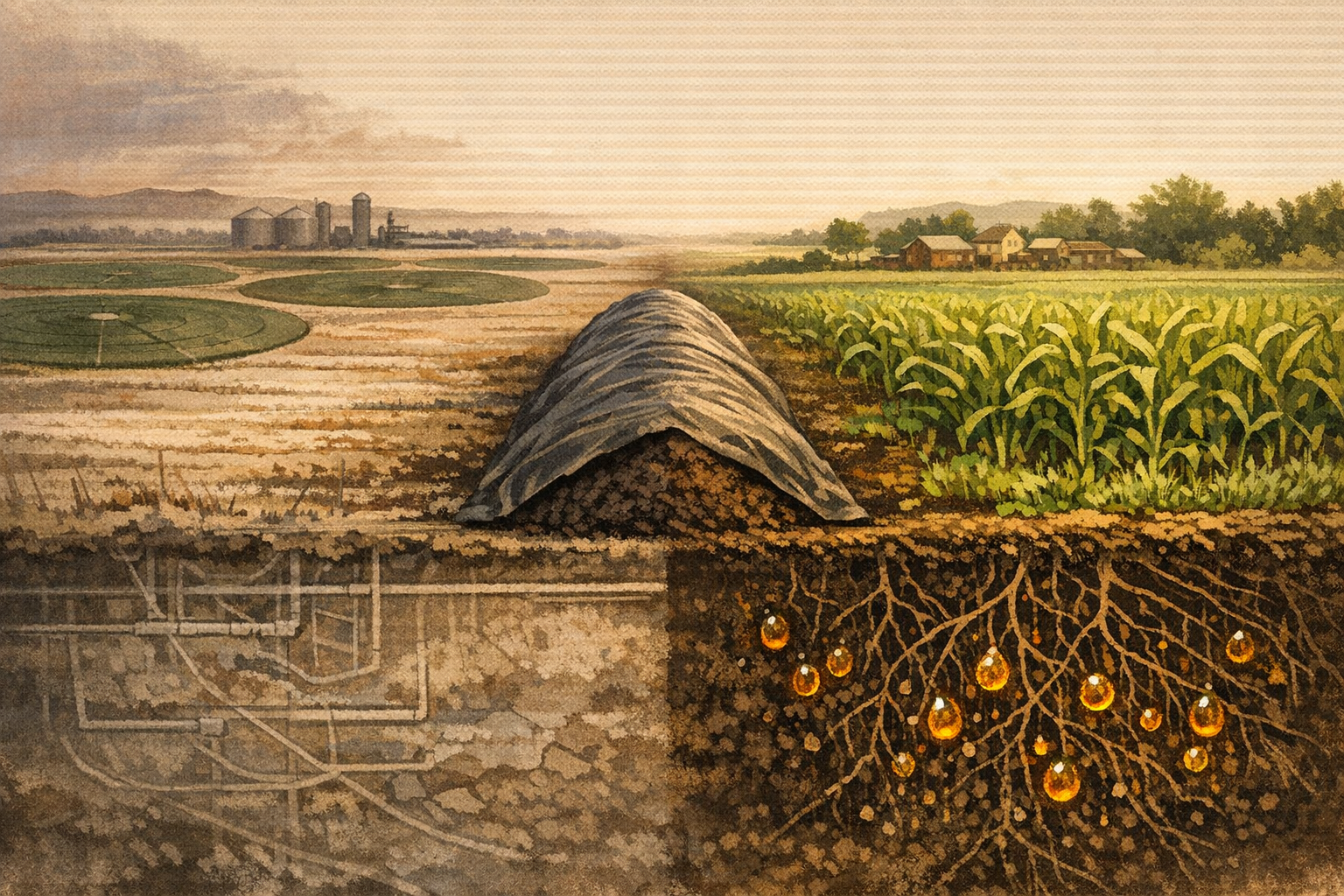
The result is HumiSoil — a biological sponge that teaches degraded soil how to hold water again. It sells for five hundred dollars a cubic yard because it solves a crisis. Farmers aren't buying compost. They're buying drought insurance.
The city gets clean. The farm gets wet. The carbon stays sequestered. The loop closes. We don't manage waste. We mine it for the molecules the future needs.
 The Coordination Layer Nobody's Building
The Infrastructure
Here's what makes this model unassailable: the problems aren't bugs — they're features of a system that has outlived its design function. And the solution creates a flywheel that accelerates with every turn.
Loading Dock Entry
Vendor contract with municipal waste manager — disposal cost becomes processing revenue
Soil Health Acceleration
Urban organics + coordination methodology = faster regenerative transition
Processing Revenue
$400+/cy soil amendments, municipal contracts, tipping fees, vocational training
Farmer Adoption
Profitable from day one — no transition cliff, clear on-ramp from amendment to practice
Network Effects
Each success makes the next jurisdiction easier — model replicates fractally
Economic Inevitability
Coordination infrastructure scales — exponential shared value replaces linear extraction
Cross-Sector Calendar Arbitrage
Here's the coordination failure everyone misses: processing equipment sits idle because each sector only needs it part of the year. The solution isn't collaboration within sectors — it's arbitrage across them.
Schools
- Minimal processing needs (summer break)
Farmers
- Peak growing season, equipment prep
Food Rescue
- Convention season — high volume emergency processing
HumiSoil
- Continuous feedstock processing
Schools
- Peak processing needs — school year startup, apple season
Farmers
- Harvest season — equipment fully utilized
Urban Waste
- Continuous HumiSoil feedstock processing
Key Insight
- Farmers and schools need equipment at DIFFERENT times — complementary demand
Schools
- Moderate processing — meal programs continue
Farmers
- Equipment idle in traditional model — this is where it fails
Food Rescue
- Holiday events + ski resort/snowbird tourism waste processing
Fire Mitigation
- Alternative strategy to winter burn piles — slash → HumiSoil feedstock
Schools
- Moderate processing
Farmers
- Planting season prep — soil amendment demand peaks
Urban Waste
- Spring yard debris → HumiSoil amendments
The Genius
- Year-round utilization solves the capital investment problem no single sector can
This is why processing infrastructure hasn't been built — it requires coordination across sectors that have never talked to each other. That coordination is what we provide.
The Theory of Change That Actually Changes Things
Large organizations optimize for risk management and stakeholder alignment. Decision-making requires extensive organizational consensus. We understand — we've operated inside those systems.
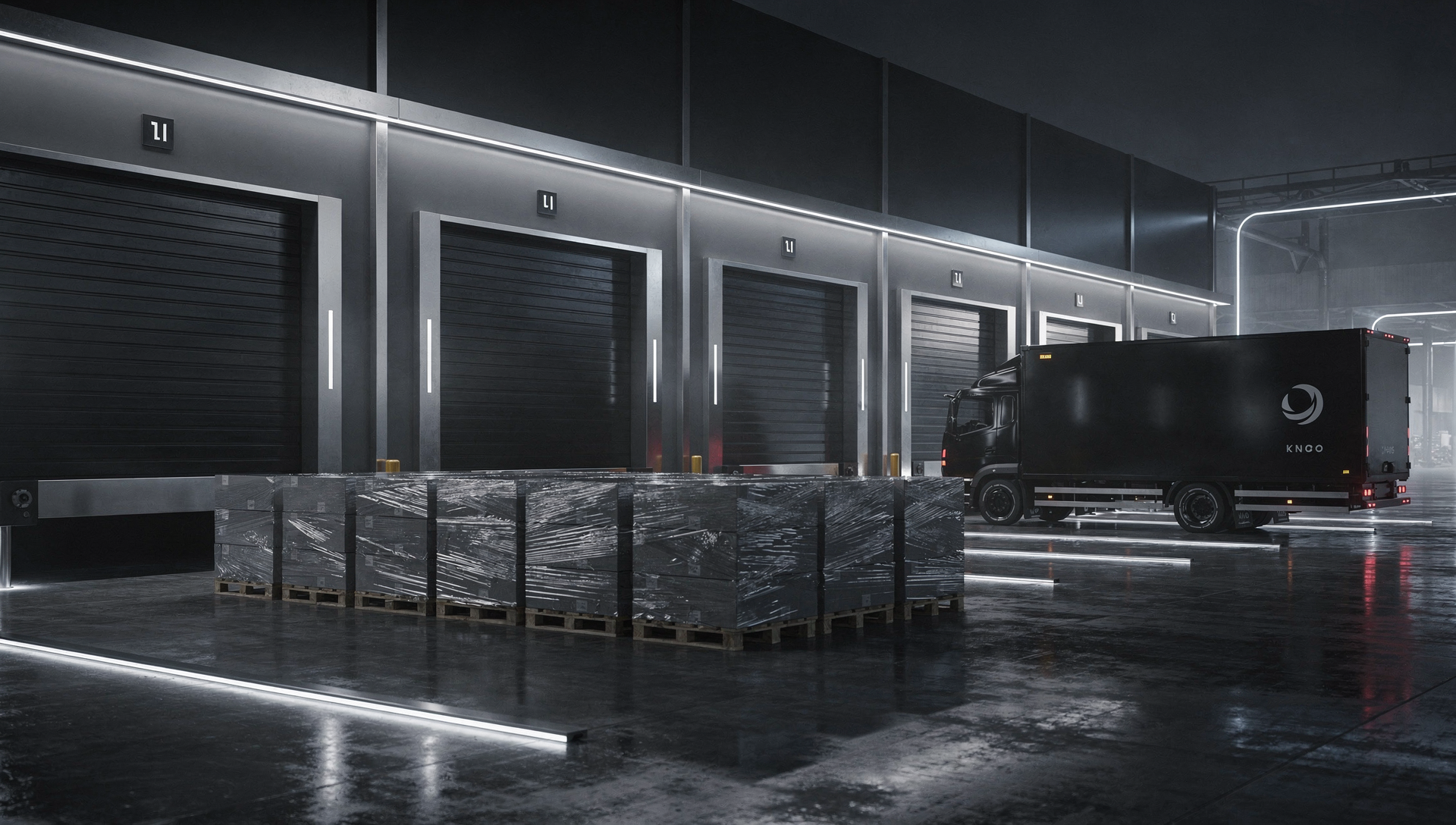
So we don't go to the front door. We go to the loading dock.
Operational departments have delegated authority to solve immediate problems within their scope. A waste manager with a disposal cost problem can sign a vendor contract. A facilities director watching budget burn on hauling fees can authorize a processing agreement. A health department can greenlight a food safety compliance upgrade.
This isn't about bypassing leadership — it's about meeting organizations where they have capacity to act. When the front door requires extensive organizational alignment, the loading dock offers a vendor relationship that delivers results while the committees are still scheduling their next meeting.
We call this the Loading Dock Doctrine: go to the person with $50k in discretionary spending and delegated vendor authority. Solve their problem. Let the results do the talking.
The Scrounger
In school, if you look at your neighbor's paper, you get detention. In a war zone, if you don't look at your neighbor's paper, you die. We're not in school anymore.
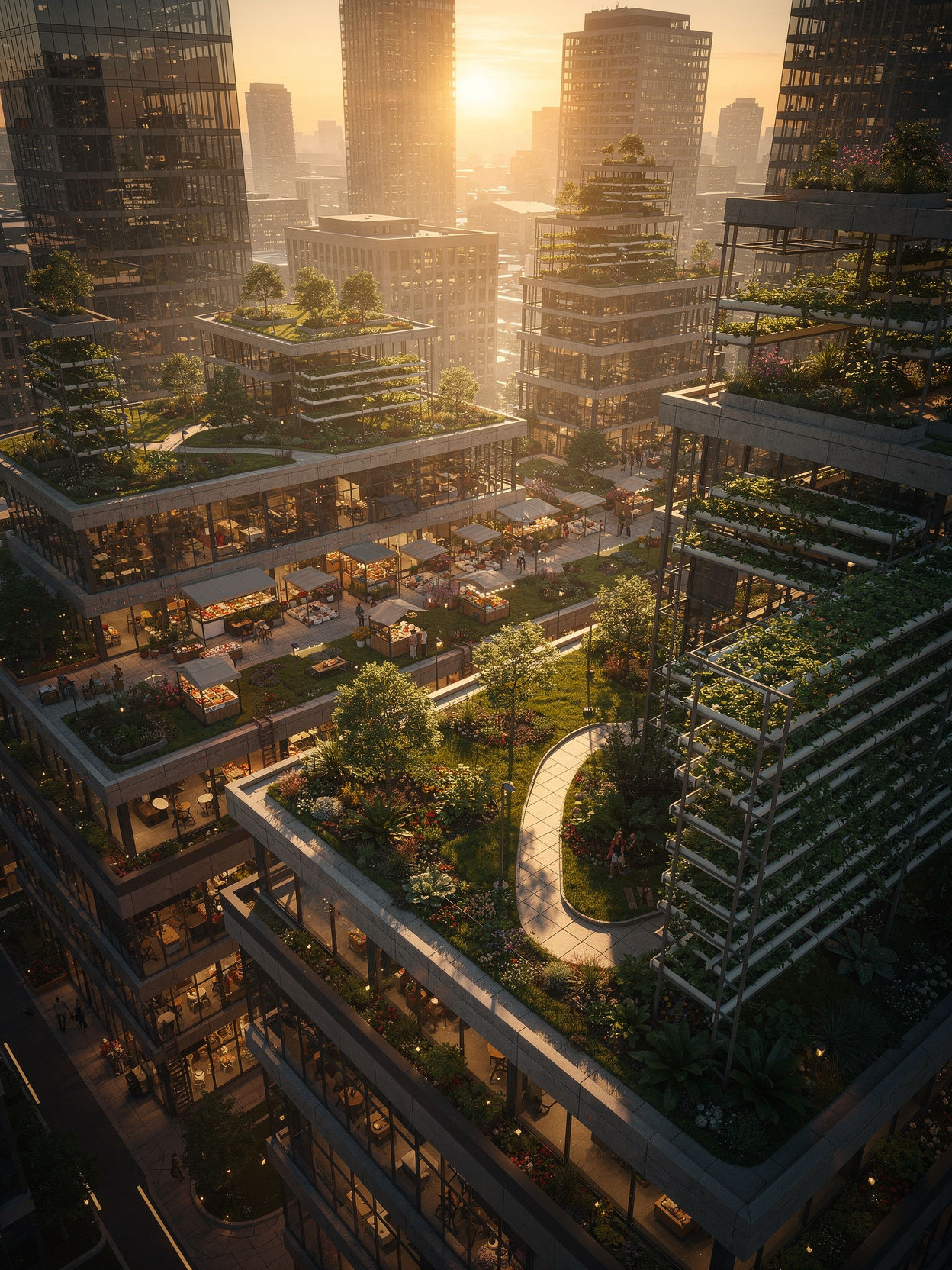
We are retraining the workforce to be Scroungers. The people who know how to find the open back door when the front entrance is locked. The people who can jury-rig solutions from salvaged parts and borrowed expertise.
The people who understand that in the age of AI and automation, connection is the only competence that matters. Network and systems literacy is the new shop class.
Our hubs train people to navigate complexity. To see resources where others see obstacles. To build alliances across sectors. To translate between the language of business and the language of ecology.
These aren't just jobs. They're survival skills for the post-linear age.
The Money
The Anti-Fragile BetVenture Capital wants to own your soul and sell it to a conglomerate in five years. They want control. They want exponential returns. They want an exit that leaves communities holding the bag when the speculators cash out.
We reject that extractive model entirely.
We use the "Old School" method: Land Syndication. Investors buy the dirt, the steel, and the machines. The physical infrastructure. The hard assets that appreciate with use instead of depreciating.

The Structure
The Community owns the mission. The operations. The relationships. The sovereignty.
It's the only investment model that offers the safety of real estate with the tax advantages of a regenerative enterprise.
Safe capital. Sovereign people. Aligned incentives. No VC hockey stick exit required.
The Map
Trinidad — Island Expedition
Navigating perilous resource scarcity to forge self-sustaining ecosystems where every challenge hones our craft for ultimate island resilience.
Kenya — Pioneering Sanctuary
Deploying vital regenerative systems in the heart of humanitarian need, proving that our approach works where conventional paths falter.
Colorado — Arid Frontier Mastery
Mastering the secrets of soil rejuvenation in the unforgiving high plains, turning water scarcity into abundance.
Australia — Charting Global Expansion
Forging alliances with agricultural pioneers to amplify our impact across vast, innovative landscapes, scaling our model.
Whether you're in Portugal, Kenya, Trinidad, or Colorado, the pattern is the same: Urban waste streams need processing. Local food production needs soil amendments. Processing infrastructure needs year-round utilization. Communities want ownership, not dependency.
The compass of our design points true, our tension-web architecture a universal key. Yet every expedition is unique, a deep dive into the local soil, climate, and the heart of its community.
The Invitation
We don't need more people sitting on committees. We don't need more stakeholders analyzing reports and scheduling follow-up meetings to discuss the minutes from the last meeting.
We need people who own loading docks. People who control commercial kitchens. People who manage farms. People who operate blast chillers. People who drive trucks. People who know where the back doors are.
We need nodes. Connection points. People who can say yes and make things happen. People who understand that the old game is over and the new game rewards those who build webs instead of pillars.
The Blueprints
The technical specifications are ready. The engineering is proven. The economics are validated.
The Network
The global web is live. Nodes are connecting. Knowledge is flowing. The geometry is replicating.
The Opportunity
The world is ready to change. The soil is calling. Let's build the hub that proves regeneration is profitable.
Let's stop talking and start vending. Let's mess around and find out.
Start the Conversation Back to Home